Hello and welcome! Okay, we’re just over halfway through January. Did you make resolutions? Did you set intentions? How are they going?
Personally, I’ve spontaneously started a new personal art project — one I’m really excited about, and that is just for me, as I frequently recommend on the blog.
My personal art project is a form of creative self-care, which sounds odd considering my work is creative. The reality is, work is work even if you’re passionate about it, and having a meaningful personal project is one of the best things you can do to feel grounded throughout the work week.
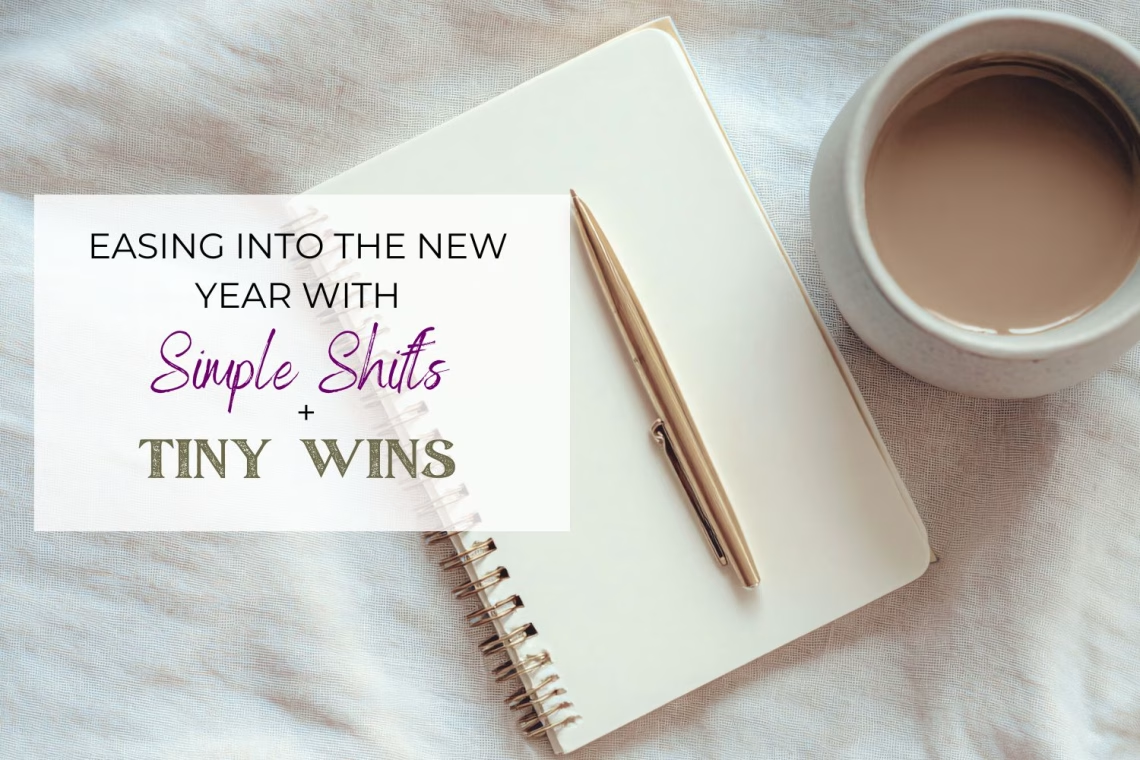
My friends, while the active pursuit of your goals doesn’t have to feel challenging, sometimes it does! So I thought this was the perfect time to write to you with some tiny changes that can feel like big wins as we ease into the New Year.
It’s that time of year — will you stay committed to your vision?
Many of us are approaching that time when the new intentions, goals, and resolutions start to feel harder. Our motivation dwindles, and it’s easy to revert to the comfort of our old ways. Why? Many reasons, not the least of which is that we set big, awesome visions for ourselves. This is perfect.
The problem is usually the greater the goal, the longer it takes to get there, and the more effort it takes to see progress. We may not start to see the fruits of our labour until well into the year. If that feels discouraging, I’m right there with you.
Here are a couple of things helping me maintain momentum right now:
First, trust. The big, meaningful goal, intention, or resolution you set was set for a reason, and that reason probably wasn’t for instant gratification. You may not see evidence of success every week (or even every month). But you will accumulate evidence of progress, being the consistent effort you’re making — and you have to trust that this progress is leading to where you wanted to go.
Second, accumulating some easy wins. They could be goal-related themselves, or they could be supporting your overall health and well-being, which serve as the foundation you need to continue pushing onward.
It’s hard to start something brand new. The learning, the uncertainty, the beginner mindset — they don’t always flow.
But tiny tweaks to your routine? These can stick with little resistance (and I’m all about ease this year).
Did you start a new hobby this year? You might also enjoy: Eight Tips to Help You Stick With a New Hobby (Once the Novelty Fades)
Some simple ideas for sustained wellness
Health is one of the biggest and most important areas of life that we like to set goals and intentions around. Our biggest barriers tend to be time and the departure from well-established routines.
I don’t have rock-solid solutions, but I do have ideas and things that work for me and my circle in a couple of main areas: movement and nutrition. These aren’t meant to be prescriptive — they’re just examples of small habits that I’ve found easier to stick with when motivation is low.
Tiny movement habits that seem to work even when unmotivated
Don’t get me wrong, I love a good workout. Running is my activity of choice. But it’s nice to have a few healthy movement habits in your back pocket for when motivation is waning!
Movement snacks: I have some familiar, simple exercises I can bust out between meetings, while waiting for the coffee to pour, or other small moments during the day. Five minutes is great, but when you’re really unmotivated, aim for just one minute. Or one set.
Once your body is moving, you may very well keep going. Or you’ll loathe it and stop — but you’ll stop having been one minute more active than you otherwise would have.
It helps to keep movements simple so that you don’t have to memorize or refer to a diagram. 10 squats, for example.
Notice how much better you feel with even a little intentional bonus movement (and if it wants to start compounding… Let it!)
Walking: It’s not just a means of getting from A to B! There are many studies on the health benefits of walking. These are a few ways I’ve made walking easier to incorporate:
- Noticing how much better I feel adding a little intentional movement during the day.
- Finding ways to do more of it within my existing routine.
- Forgetting about the steps and enjoying the time spent moving instead.
You don’t need to track steps to receive the health benefits. When we have a step goal, it occasionally works against us. (I won’t get anywhere near 10,000 steps today, so why bother at all?) Everything adds up!
And for (former) fellow office bumblebees: I always felt a little more autonomy over my time and space when I went out for a walk during the workday. Anyone else?
Classes: The yoga studios are pretty full these days, and for good reason! I enjoy doing yoga at home, but it’s so easy to sidestep. It’s always there, always available, and situated in my house where there are a hundred other things I feel like I should be doing.
The extra push of signing up for a class in person might be just the thing to help you stay consistent! You’ve got the start time to get you up and into your class clothes, an instructor to keep you on-task and in proper form, and a community of fellow participants who are also choosing to show up for themselves.
Small shifts in nutrition that can support your energy
These are purely things I’ve noticed, not true nutritional advice — just dipping into my own pool of experience. We all need to find what’s right for our bodies and lifestyles — ideally through research and collaboration with our healthcare professionals.
Nourishing ourselves is one of those things that can easily float on autopilot: grab the morning coffee, reach for the coffee-adjacent baked good, grab the meal of least resistance to consume while multitasking, and so on.
But much like with movement, adding some intentional nourishment can be a little change that makes a big difference to your energy levels.
No specific recommendations here; just a couple of easy mental reframes.
Mindfulness: Finding a dietary routine that worked for me required my noticing things. For example, linking how I was feeling throughout the day to:
- what I had consumed and when
- my degree of hunger or fullness
- what types of foods I craved
When we create a nutrition goal (perhaps not nutrition exactly, but let’s say drinking more water), we tend to want to set up a habit tracker for it. This is motivating because it helps us see our progress and keeps us accountable.
But much like counting steps, it can also swing us back into a success/failure mindset.
A trick to make it really stick is to notice how it feels to be well-hydrated. What difference has it made? Can you tell in your energy levels? Your appetite? Your skin?
Sometimes the best glue to make a habit stick is experiencing the difference it makes!
Experimentation: I spend a lot of time in the creative space, so when inspiration hits, I do my best to listen. These are some nutritional shifts that I made when I did. No roadmap, no concrete end goal — just the desire to feel healthier and more energized. Here’s what that looked like for me:
- I’ve always operated under the notion that breakfast is for sweet foods like cereals, jam on toast, etc. I really didn’t enjoy them. It turns out I’m a savoury gal before 9am, and when I started introducing savoury foods (including proteins and healthy fats), it changed my energetic trajectory for the day. No more shaky, foggy crashes.
- Speaking of swaps, I discovered that I can totally satisfy a cookie craving with some homemade granola on sweetened Greek yogurt, and I feel pretty good about that choice. I’ve been making this granola recipe for years: Healthy Granola Recipe – Cookie and Kate
- I was introduced to the idea of bulletproof coffee, and I started making my own version using Ceylon cinnamon and coconut oil. It could be the placebo effect, but I swear my levels of concentration have improved since making this switch. (Also, when mixed well it creates a creamy, nutty coffee to start the day with. I sometimes find myself looking forward to it the night before.)
The point isn’t to try all of these (they’re just ideas I had that wound up sticking). It’s to find what feels good through mindfulness and experimentation.
Tiny habits to stay connected with your creativity
Creative practices help you stay grounded and connected with yourself, so I couldn’t help but include them in this post. Do you have creative goals for this year? I certainly do!
But grinding away at a big creative goal can feel intimidating, and we’re going for ease this year. Even the smallest acts of creativity can help spark big ideas (or motivate you toward working on them).
And even if big creative moves aren’t in the cards, small acts of creativity are great for your overall sense of well-being.
This feels like a perfect time to add that I write a monthly letter so that we can stay connected — and to encourage you to stay connected with your creativity. If your inbox could use some monthly creative motivation, check it out here: Kindling for your creative spark – right to your inbox
Let’s get into some little creative habits you can try!
Keep a sketchbook, use it imperfectly
Just an inexpensive, low-pressure little book will do. In fact, it’ll be perfect to invite its use. So many of us get intimidated by a brand new sketchbook out of fear we’ll ruin it, or out of concern that we don’t have the perfect ideas for it.
So, don’t make it precious — the sketchbook, or the ideas you’ll fill it with.
But do give yourself five or ten minutes, and just put pen to paper. First page, middle of the book, it doesn’t matter. Doodle, make shapes, or practice drawing what you see!
Whenever I think about a drawing habit, I’m reminded of Danny Gregory’s story about how he developed his by simply sketching his teacup while waiting for his kettle to boil in the mornings. Who knew where it would lead!
And if you need some more inspiration, check out Danny Gregory’s Sketchbook Skool channel on YouTube where he helps you capture the magic in the mundane — no drawing experience required.
Try free writing for a set amount of time
I’m not necessarily suggesting Julia Cameron’s Morning Pages, although you could absolutely try them.
Morning pages are 3 full pages of stream-of-consciousness writing, and this can be quite a time commitment! When I first started, they took me about 45 minutes to write. Besides, it can feel like a real battle getting to that third page — and we’re going for ease, here. (Post to come one day on this!)
Nevertheless, I’m inspired by them.
The point is to let your creative juices flow onto the paper in the form of words… Or to let whatever sludge is blocking your creative juices clear out. You can think of it as a brain dump — a place to set down your mental load.
You could sit down with a 10-minute timer and literally write a stream of consciousness, just to see what materializes. (I am writing right now, but I don’t know if I’m writing it right. How did they know they were writing write right when they went to write it, anyway? I need another coffee.)
The practice of writing can serve as a grounding tool, a landing pad for inspiration, or a place to work out the solutions to problems.
Why not experiment with your writing time? Instead of 10 minutes of stream-of-consciousness writing, you could try journaling (reflection), dreaming (what big amazing things can you dream up for your life?), or rapid-logging everything you need and want to get done that day.
Which one felt most refreshing?
On a related note, I created A Grounding, Bullet Journal-Inspired 5 Minute Reset which is essentially what I would do in my bullet journal between dropping the kids off at school and starting my workday — an even shorter more productive version of this exercise, with breathing built in.
Indulge in a tutorial for your hobby of choice
Whenever a tutorial for something (usually a watercolour painting) catches my eye, I save it so that I can return to it… one day.
Why not today?
Block out a little time in your calendar and do just one quick tutorial for your hobby of choice. This can help you stay connected with your creative side, and learn or improve your craft without the time commitment of a proper class or the mental load of figuring out exactly what to make today.
(We’re painting sailboats in the sunset today? Great.)
I find that tutorials are also helpful to get past any fear of the blank page and decision fatigue when it comes to which skill you’ll be working on.
Permission slips
It’s taken me the entire beginning of the New Year to write this post. Why?
I’m trying to feel out what ease means to me at the start of the year.
As we often do, I dove headfirst into the new ideas, routines, and ambitions that the fresh calendar year brought and needed some regrouping and recovery time. It was all too easy to ride the wave of new energy without considering what a sustainable pace looks like under a new intention.
That’s all to say, I don’t implement plans and new habits and routines perfectly (none of us do), and I’m constantly readjusting. But I’m also constantly open to inspiration — new ways to do things, to experiment, and to find what feels good.
And to do so in a way that is subtle and inviting, not requiring a complete overhaul.
That is the point of this post.
I hope you’re easing into the New Year with energy and optimism! (And if you’re not, you’re still good — it’s normal, and we’ve got plenty of 2026 left to find our way!)
Thanks for reading!
P.S. This blog is about creative reclamation (and the systems that support it). So, where are you on your creative journey? Choose Your Creative Path — I’d love to meet you there.